
What is Software Defined WAN Security
Introduction
You might have heard about Software Defined WAN (SD-WAN) and wondered how it keeps your network safe. In today’s world, where businesses rely heavily on cloud applications and remote work, securing wide area networks is more important than ever. That’s where Software Defined WAN Security comes in.
We’ll explore what SD-WAN Security means, why it matters, and how it protects your data and devices. By the end, you’ll understand how this modern approach helps businesses stay secure while enjoying faster, more reliable network connections.
What is Software Defined WAN (SD-WAN)?
Before diving into security, it’s good to know what SD-WAN is. SD-WAN is a technology that simplifies managing wide area networks. Instead of relying on traditional hardware and fixed connections, it uses software to control network traffic over multiple types of links like broadband, LTE, and MPLS.
Key Features of SD-WAN
- Centralized control through software
- Dynamic path selection for better performance
- Support for cloud and on-premises applications
- Cost savings by using cheaper internet links
SD-WAN makes networks more flexible and easier to manage, especially for businesses with multiple locations or remote workers.
Why is Security Important in SD-WAN?
When your network spans many locations and uses public internet links, security risks increase. Traditional WANs often rely on private lines that are more secure but expensive. SD-WAN uses public internet connections, which can be vulnerable to attacks.
Common Security Challenges in SD-WAN
- Exposure to cyber threats like malware and ransomware
- Data interception on public networks
- Unauthorized access to network resources
- Complexity in managing security policies across sites
Because SD-WAN connects many devices and users, it needs strong security measures to protect sensitive information and maintain business continuity.
What is Software Defined WAN Security?
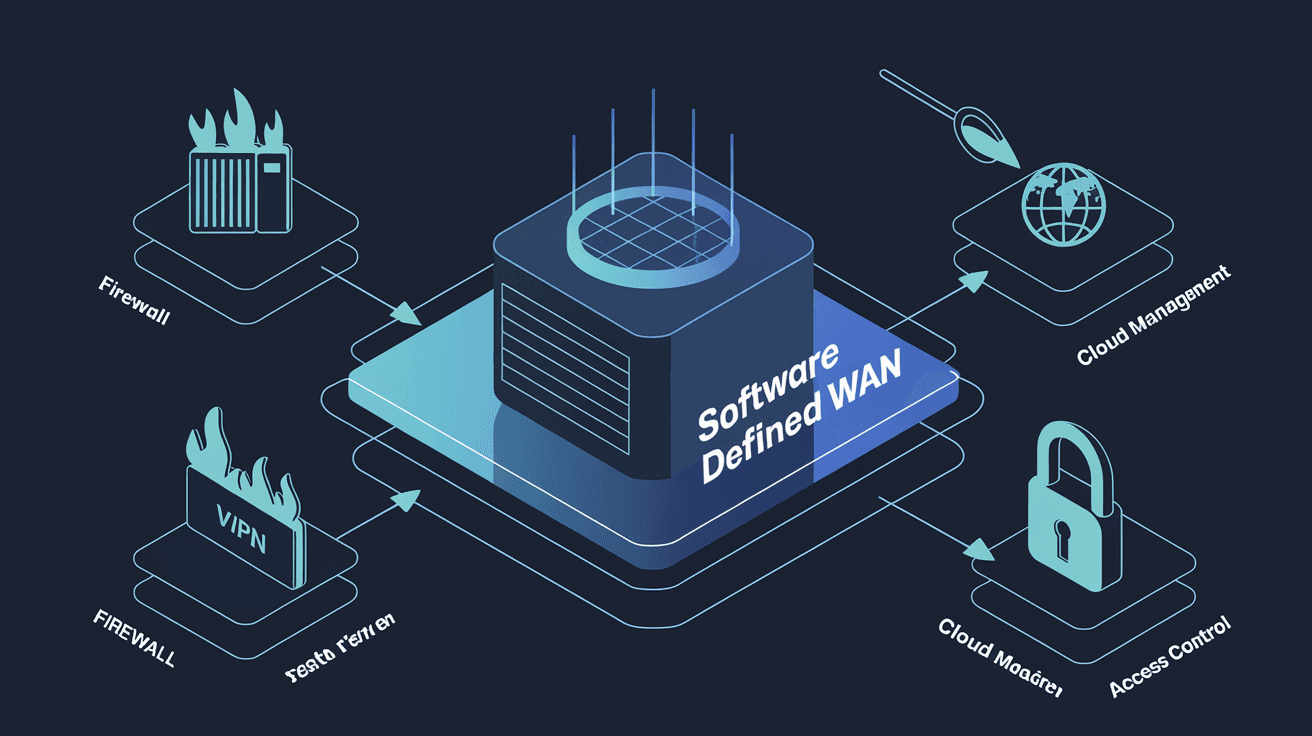
Software Defined WAN Security refers to the set of security technologies and practices integrated into SD-WAN solutions. It protects data, applications, and users by combining network control with advanced security features.
How SD-WAN Security Works
- Encrypts data traffic between sites and users
- Uses firewalls to block unauthorized access
- Applies intrusion detection and prevention systems (IDS/IPS)
- Integrates secure web gateways and malware protection
- Supports zero trust network access (ZTNA) models
This approach ensures that your network is not only fast and flexible but also secure against modern cyber threats.
Key Components of SD-WAN Security
Understanding the main parts of SD-WAN Security helps you see how it protects your network.
1. Encryption and VPNs
SD-WAN encrypts data traveling between locations using VPN tunnels. This prevents hackers from intercepting sensitive information on public networks.
2. Next-Generation Firewalls (NGFW)
These firewalls inspect traffic deeply to detect and block threats. They can identify malicious patterns and stop attacks before they reach your devices.
3. Intrusion Detection and Prevention Systems (IDS/IPS)
IDS/IPS monitor network traffic for suspicious activity. They alert administrators or automatically block harmful traffic.
4. Secure Web Gateways (SWG)
SWGs filter internet traffic to block access to dangerous websites and prevent malware downloads.
5. Zero Trust Network Access (ZTNA)
ZTNA ensures that users and devices are verified before accessing resources, limiting exposure to threats.
Benefits of Using SD-WAN Security
Implementing SD-WAN Security offers many advantages for businesses.
Enhanced Protection
- Blocks cyberattacks like phishing, ransomware, and DDoS
- Secures cloud applications and remote users
- Prevents data breaches and leaks
Simplified Management
- Centralized security policy control
- Automated threat detection and response
- Easier compliance with regulations
Cost Efficiency
- Reduces need for expensive private lines
- Lowers operational costs with cloud-based security
- Scales easily as your network grows
How SD-WAN Security Supports Cloud and Remote Work
With more companies moving to cloud services and remote work, SD-WAN Security plays a vital role.
Cloud Security Integration
SD-WAN connects users directly to cloud applications with built-in security. This reduces latency and risk by avoiding backhauling traffic through data centers.
Secure Remote Access
Employees working from home or on the go can securely connect to company resources. SD-WAN Security verifies devices and encrypts connections to keep data safe.
Challenges and Considerations in SD-WAN Security
While SD-WAN Security offers many benefits, there are some challenges to keep in mind.
Complexity of Integration
Combining multiple security tools into SD-WAN can be complex. It requires careful planning and expertise.
Vendor Selection
Choosing the right SD-WAN provider with strong security features is critical. Not all solutions offer the same level of protection.
Continuous Monitoring
Security threats evolve constantly. Businesses must monitor their SD-WAN environment regularly and update policies.
Best Practices for Implementing SD-WAN Security
To get the most from SD-WAN Security, follow these tips:
- Define clear security policies aligned with business needs
- Use multi-factor authentication (MFA) for user access
- Regularly update software and security signatures
- Monitor network traffic for unusual behavior
- Train employees on cybersecurity awareness
Future Trends in SD-WAN Security
The SD-WAN Security landscape continues to evolve with new technologies.
AI and Machine Learning
These tools help detect threats faster by analyzing traffic patterns and predicting attacks.
Integration with SASE
Secure Access Service Edge (SASE) combines SD-WAN and cloud security into one platform, offering unified protection.
Increased Automation
Automated responses to threats reduce human error and speed up mitigation.
Conclusion
Now you know that Software Defined WAN Security is essential for protecting modern networks. It combines flexible SD-WAN technology with advanced security tools to keep your data and users safe. This approach supports cloud adoption, remote work, and cost savings while defending against cyber threats.
By understanding the components, benefits, and best practices of SD-WAN Security, you can make informed decisions to secure your network effectively. As threats evolve, staying updated and choosing the right solutions will help your business thrive in a connected world.
FAQs
What makes SD-WAN Security different from traditional WAN security?
SD-WAN Security integrates advanced software controls and cloud-based protections, unlike traditional WANs that rely on fixed hardware and private lines. It offers more flexibility and better protection for cloud and remote users.
Can SD-WAN Security protect against ransomware attacks?
Yes, SD-WAN Security includes firewalls, intrusion prevention, and malware filtering that help block ransomware and other cyber threats before they reach your network.
How does SD-WAN Security support remote workers?
It provides encrypted connections and verifies user devices through zero trust models, ensuring remote employees access resources securely from anywhere.
Is SD-WAN Security expensive to implement?
While initial setup costs vary, SD-WAN Security often reduces overall expenses by using cheaper internet links and cloud-based security, lowering operational costs.
What should I look for when choosing an SD-WAN Security provider?
Look for features like strong encryption, integrated firewalls, cloud security support, centralized management, and good customer support to ensure comprehensive protection.




