
What is Quantum Cryptography
Introduction
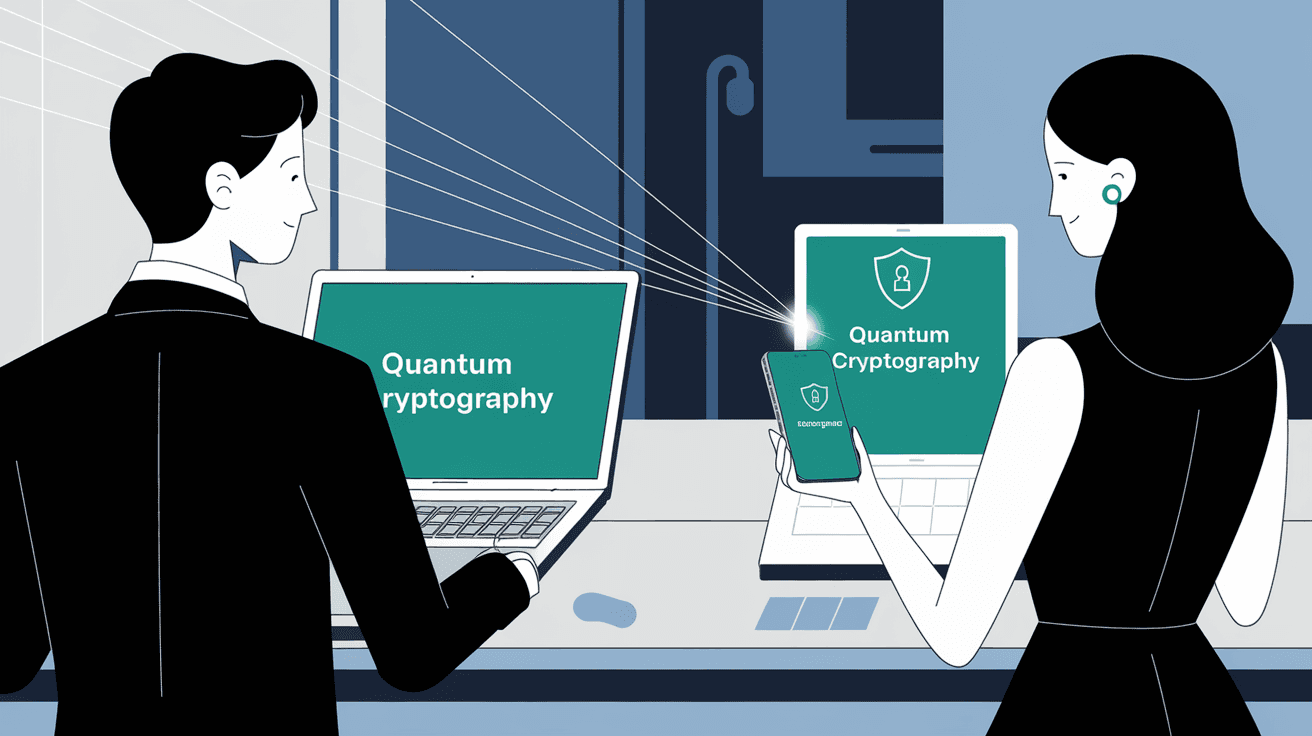
You might have heard about quantum cryptography as the future of secure communication. But what exactly is it, and why is it gaining so much attention? In simple terms, quantum cryptography uses the principles of quantum physics to protect information, making it nearly impossible for hackers to intercept or decode messages.
In this article, I’ll walk you through the basics of quantum cryptography, how it works, and why it’s considered a game-changer for data security. Whether you’re a tech enthusiast or just curious, you’ll find clear explanations and real-world examples to help you understand this fascinating technology.
What is Quantum Cryptography?
Quantum cryptography is a method of securing communication by using the laws of quantum mechanics. Unlike traditional cryptography, which relies on complex math problems, quantum cryptography uses the behavior of tiny particles like photons to create secure keys for encrypting messages.
The key idea is that quantum particles can exist in multiple states at once and that measuring these particles changes their state. This unique property helps detect any eavesdropping attempts, making the communication highly secure.
Key Features of Quantum Cryptography
- Quantum Key Distribution (QKD): The most common application, where two parties share a secret key using quantum particles.
- Eavesdropping Detection: Any attempt to intercept the key changes the quantum state, alerting the users.
- Unconditional Security: Security based on physics, not just computational difficulty.
How Does Quantum Cryptography Work?
Quantum cryptography mainly works through a process called Quantum Key Distribution (QKD). Here’s a simple breakdown of how it functions:
- Preparation: One party (Alice) sends photons polarized in different directions to another party (Bob).
- Transmission: These photons carry bits of information (0s and 1s) encoded in their quantum states.
- Measurement: Bob measures the photons using randomly chosen bases.
- Key Sifting: Alice and Bob compare their measurement bases over a public channel and keep only the matching ones.
- Error Checking: They check for errors that might indicate eavesdropping.
- Key Generation: If the error rate is low, they generate a shared secret key.
Example: BB84 Protocol
The BB84 protocol is the first and most widely used QKD method. It uses two sets of polarization states to encode bits:
- Rectilinear basis: Horizontal (0°) and Vertical (90°)
- Diagonal basis: 45° and 135°
If an eavesdropper tries to measure the photons, the quantum states change, and Alice and Bob can detect this by comparing parts of their keys.
Why is Quantum Cryptography Important?
Quantum cryptography is important because it addresses the weaknesses of classical encryption methods. Traditional cryptography depends on mathematical problems that computers find hard to solve. However, with the rise of quantum computers, these problems could become easy to crack.
Advantages Over Classical Cryptography
- Resistance to Quantum Attacks: Quantum cryptography is designed to be secure even against quantum computers.
- Real-Time Eavesdropping Detection: Unlike classical methods, it can detect if someone is trying to listen in.
- Long-Term Security: It ensures data remains secure for decades, which is crucial for sensitive information.
Real-World Applications of Quantum Cryptography
Quantum cryptography is no longer just theoretical. It’s being used in various fields to protect critical information.
Banking and Finance
Banks use quantum cryptography to secure transactions and protect customer data. For example, some financial institutions have started pilot projects to integrate QKD into their communication networks.
Government and Military
Governments are investing in quantum cryptography to safeguard classified information. Countries like China and the United States have launched quantum communication satellites to test secure global networks.
Healthcare
Patient records and medical data require high security. Quantum cryptography helps hospitals and research centers protect sensitive information from cyber threats.
Telecommunications
Telecom companies are exploring quantum cryptography to build ultra-secure communication channels for their customers.
Challenges and Limitations of Quantum Cryptography
While quantum cryptography offers many benefits, it also faces some challenges.
Technical Challenges
- Distance Limitations: Quantum signals weaken over long distances, limiting the range of QKD.
- Infrastructure Costs: Setting up quantum networks requires expensive and specialized equipment.
- Integration: Combining quantum cryptography with existing systems can be complex.
Practical Limitations
- Speed: Quantum key generation can be slower than classical methods.
- Environmental Sensitivity: Quantum states can be disturbed by environmental noise.
Despite these challenges, ongoing research is making quantum cryptography more practical and accessible.
The Future of Quantum Cryptography
The future looks promising for quantum cryptography. Advances in technology are helping overcome current limitations, and new protocols are being developed to improve efficiency and range.
Emerging Trends
- Quantum Repeaters: Devices that extend the distance of quantum communication.
- Satellite-Based QKD: Expanding secure communication globally via satellites.
- Hybrid Systems: Combining quantum and classical cryptography for better performance.
As quantum computers become more powerful, the demand for quantum-safe security solutions will grow. Quantum cryptography is expected to play a central role in protecting data in the coming decades.
Conclusion
Quantum cryptography is a revolutionary technology that uses the strange rules of quantum physics to secure communication. By enabling the detection of eavesdropping and offering protection against future quantum computers, it promises a new era of data security.
While there are challenges to overcome, the progress in this field is rapid. Whether it’s protecting your financial transactions or securing government secrets, quantum cryptography is shaping the future of how we keep information safe. If you want to stay ahead in the digital world, understanding quantum cryptography is a great place to start.
FAQs
What makes quantum cryptography more secure than traditional methods?
Quantum cryptography uses quantum mechanics, which allows detection of any eavesdropping. Unlike traditional methods, its security is based on physical laws, not just math problems, making it resistant to quantum computer attacks.
Can quantum cryptography be used for everyday internet security?
Currently, quantum cryptography is mostly used in specialized fields due to cost and technical challenges. However, ongoing research aims to make it practical for everyday internet security in the future.
What is Quantum Key Distribution (QKD)?
QKD is a process where two parties share a secret encryption key using quantum particles. It ensures that any interception attempt changes the quantum state, alerting users to potential eavesdropping.
Are there any companies offering quantum cryptography services?
Yes, several companies and startups provide quantum cryptography solutions, especially for financial institutions and governments. Examples include ID Quantique and Quantum Xchange.
How far can quantum cryptography signals travel?
Currently, quantum signals can travel up to a few hundred kilometers through fiber optics. Satellite-based QKD is helping extend this range globally by transmitting quantum keys via space.




