
What is NIST Privacy Framework
Introduction
If you’re wondering how organizations manage privacy risks in today’s digital world, you’re not alone. Privacy concerns are growing, and many companies want a clear way to protect personal data. That’s where the NIST Privacy Framework comes in. It’s a tool designed to help organizations understand and improve their privacy practices.
In this article, I’ll explain what the NIST Privacy Framework is, how it works, and why it’s important for businesses and individuals. You’ll also learn how it fits into the bigger picture of privacy management and data protection.
What is the NIST Privacy Framework?
The NIST Privacy Framework is a voluntary guide created by the National Institute of Standards and Technology (NIST). It helps organizations identify, assess, and manage privacy risks. Unlike laws or regulations, it’s not mandatory but serves as a flexible tool to improve privacy programs.
NIST developed this framework to address the growing need for a common language and approach to privacy risk management. It builds on the success of the NIST Cybersecurity Framework but focuses specifically on privacy issues.
Key Features of the Framework
- Voluntary and flexible: Organizations of all sizes and industries can use it.
- Risk-based approach: Helps prioritize privacy risks based on potential harm.
- Outcome-focused: Encourages measurable improvements in privacy.
- Integrates with other frameworks: Works alongside cybersecurity and risk management standards.
Why Was the NIST Privacy Framework Created?
Privacy laws and regulations vary widely across countries and industries. This patchwork can make it hard for organizations to keep up and protect personal data effectively. The NIST Privacy Framework was created to:
- Provide a common language for privacy risk management.
- Help organizations align privacy with business goals.
- Support innovation while protecting individual privacy.
- Encourage transparency and accountability in data handling.
By offering a clear structure, the framework helps organizations move beyond compliance and build trust with customers and partners.
How Does the NIST Privacy Framework Work?
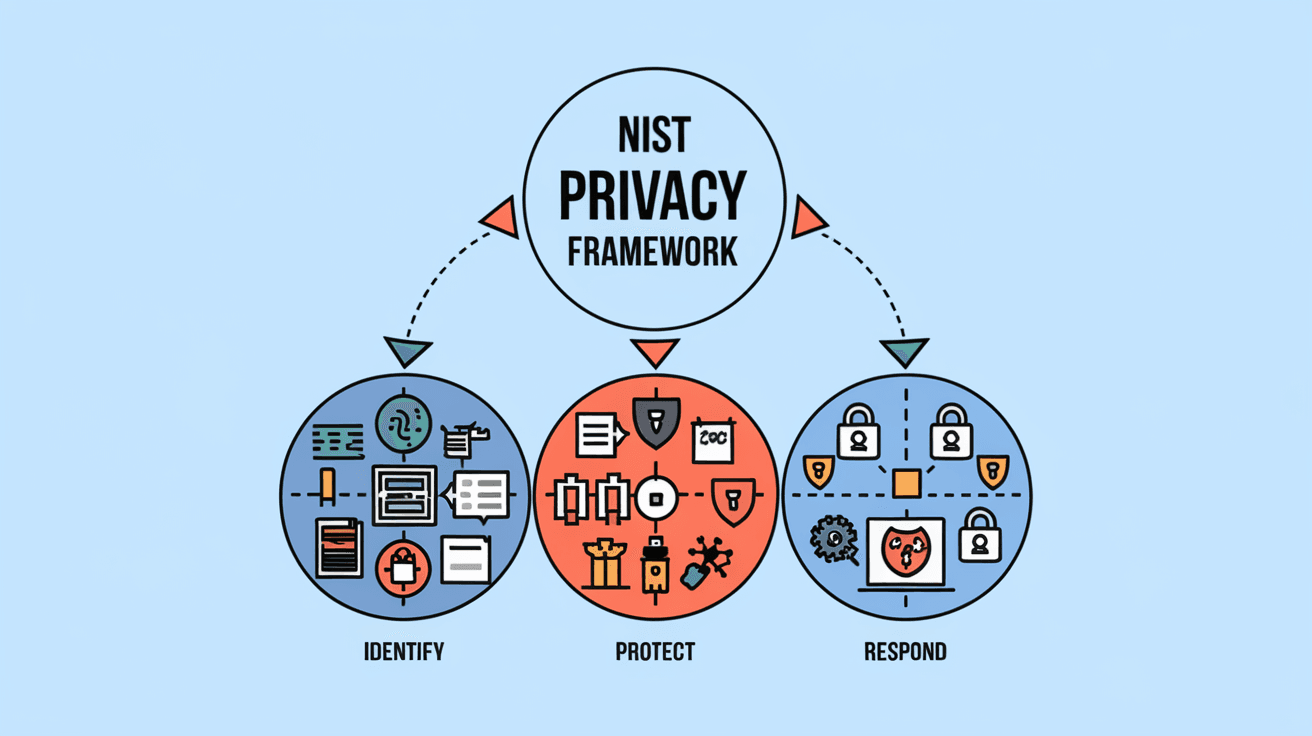
The framework is organized into three main parts: Core, Profiles, and Implementation Tiers. Each part plays a role in helping organizations manage privacy risks.
1. Core
The Core is the heart of the framework. It consists of five functions that describe high-level privacy activities:
- Identify: Understand the privacy risks related to data processing.
- Govern: Establish policies and procedures to manage privacy.
- Control: Implement safeguards to protect personal data.
- Communicate: Share privacy information with stakeholders.
- Protect: Respond to privacy events and improve protections.
Each function includes categories and subcategories that provide specific actions or outcomes.
2. Profiles
Profiles help organizations customize the framework to their needs. They describe the current state of privacy practices and the desired outcomes. This allows businesses to:
- Assess gaps in their privacy programs.
- Set priorities based on risk and resources.
- Track progress over time.
Profiles can be tailored for different departments, projects, or products.
3. Implementation Tiers
Tiers describe how well an organization manages privacy risks. They range from Tier 1 (Partial) to Tier 4 (Adaptive). These tiers help organizations understand their maturity level and plan improvements.
- Tier 1 (Partial): Limited awareness and informal privacy practices.
- Tier 2 (Risk Informed): Some risk management but inconsistent.
- Tier 3 (Repeatable): Formalized and consistent privacy processes.
- Tier 4 (Adaptive): Proactive and continuously improving privacy management.
Who Should Use the NIST Privacy Framework?
The framework is designed for a wide range of users:
- Businesses: To build or improve privacy programs.
- Government agencies: To align privacy practices with regulations.
- Technology developers: To design privacy into products and services.
- Privacy professionals: To communicate and manage privacy risks effectively.
Because it’s flexible, small startups and large enterprises alike can benefit from using the framework.
Benefits of Using the NIST Privacy Framework
Using the NIST Privacy Framework offers several advantages:
- Improved privacy risk management: Helps identify and reduce risks before they cause harm.
- Better compliance: Supports alignment with laws like GDPR, CCPA, and others.
- Enhanced trust: Demonstrates commitment to protecting personal data.
- Clear communication: Provides a common language for privacy across teams.
- Supports innovation: Encourages privacy by design without stifling creativity.
How to Implement the NIST Privacy Framework
Implementing the framework involves several steps:
- Understand your context: Identify what personal data you collect and how it’s used.
- Create a profile: Map your current privacy practices and desired outcomes.
- Assess risks: Identify gaps and prioritize risks based on potential impact.
- Develop a plan: Set goals and allocate resources to improve privacy controls.
- Implement controls: Put policies, procedures, and technologies in place.
- Communicate: Share privacy information with employees, customers, and partners.
- Monitor and improve: Regularly review and update your privacy program.
Tips for Successful Implementation
- Involve stakeholders from legal, IT, and business teams.
- Use the framework alongside cybersecurity efforts.
- Train employees on privacy awareness.
- Document your privacy practices clearly.
- Stay updated on privacy regulations and best practices.
How Does the NIST Privacy Framework Relate to Other Privacy Standards?
The NIST Privacy Framework complements other privacy standards and regulations. It does not replace laws but helps organizations meet their requirements more effectively.
Examples of Related Standards
- GDPR (General Data Protection Regulation): European privacy law focused on data protection and individual rights.
- CCPA (California Consumer Privacy Act): U.S. law enhancing consumer privacy rights.
- ISO/IEC 27701: International standard for privacy information management.
- NIST Cybersecurity Framework: Focuses on cybersecurity but overlaps with privacy in protecting data.
By using the NIST Privacy Framework, organizations can create a unified approach that supports compliance with these standards.
Real-World Examples of the NIST Privacy Framework in Action
Many organizations have started adopting the NIST Privacy Framework to strengthen their privacy programs. For example:
- A healthcare provider used the framework to identify gaps in patient data protection and improve consent management.
- A financial services company aligned its privacy policies with the framework to better manage third-party risks.
- A tech startup integrated the framework into product development to ensure privacy by design.
These examples show how the framework can be adapted to different industries and needs.
Challenges and Considerations
While the NIST Privacy Framework is a powerful tool, some challenges exist:
- Resource constraints: Smaller organizations may find it hard to dedicate time and money.
- Complexity: Understanding and applying the framework requires some expertise.
- Evolving privacy landscape: Laws and technologies change rapidly, requiring updates.
- Integration: Aligning with existing risk management and cybersecurity programs can be tricky.
Despite these challenges, the framework’s flexibility allows organizations to start small and grow their privacy efforts over time.
Conclusion
The NIST Privacy Framework is a valuable resource for anyone looking to manage privacy risks effectively. It offers a clear, flexible approach that helps organizations understand their privacy challenges and improve their practices. Whether you’re a business owner, privacy professional, or developer, this framework can guide you toward better privacy management.
By adopting the NIST Privacy Framework, you’re not just complying with regulations—you’re building trust and protecting the people whose data you handle. It’s a smart step toward a safer, more privacy-conscious future.
FAQs
What is the main purpose of the NIST Privacy Framework?
The main purpose is to help organizations identify and manage privacy risks in a flexible, risk-based way. It supports building strong privacy programs and improving data protection.
Is the NIST Privacy Framework mandatory?
No, it is voluntary. Organizations can choose to use it as a guide to improve privacy practices but are not legally required to follow it.
How does the NIST Privacy Framework relate to cybersecurity?
It complements cybersecurity efforts by focusing specifically on privacy risks, while cybersecurity protects data from threats. Both frameworks can be used together for comprehensive risk management.
Can small businesses use the NIST Privacy Framework?
Yes, the framework is designed to be flexible and scalable, making it suitable for organizations of all sizes, including small businesses.
How often should organizations update their privacy profiles?
Organizations should review and update their privacy profiles regularly, especially when there are changes in data processing, regulations, or technology to ensure ongoing effectiveness.




