
What is NIST Cybersecurity Framework
Introduction
You might have heard about the NIST Cybersecurity Framework but wonder what it really means for your business or organization. In today’s digital world, protecting your data and systems is more important than ever. The NIST Cybersecurity Framework offers a clear, flexible way to manage cybersecurity risks.
In this article, I’ll explain what the NIST Cybersecurity Framework is, how it works, and why it’s a valuable tool for anyone looking to improve their cybersecurity. Whether you’re new to cybersecurity or want to strengthen your defenses, this guide will help you understand the basics and practical uses of the framework.
What is the NIST Cybersecurity Framework?
The NIST Cybersecurity Framework is a set of guidelines created by the National Institute of Standards and Technology (NIST). It helps organizations manage and reduce cybersecurity risks. The framework is voluntary but widely respected and used across industries, from government agencies to private companies.
NIST developed this framework to provide a common language and approach for cybersecurity. It’s designed to be flexible so organizations of all sizes and sectors can adapt it to their needs. The framework focuses on identifying risks, protecting systems, detecting threats, responding to incidents, and recovering from attacks.
Key Features of the Framework
- Risk-based approach: Focuses on managing cybersecurity risks based on an organization’s priorities.
- Flexible and adaptable: Can be customized for different industries and organizational sizes.
- Common language: Helps teams communicate clearly about cybersecurity goals and progress.
- Voluntary but widely adopted: Many organizations use it to meet regulatory requirements or improve security.
The Five Core Functions of the NIST Cybersecurity Framework
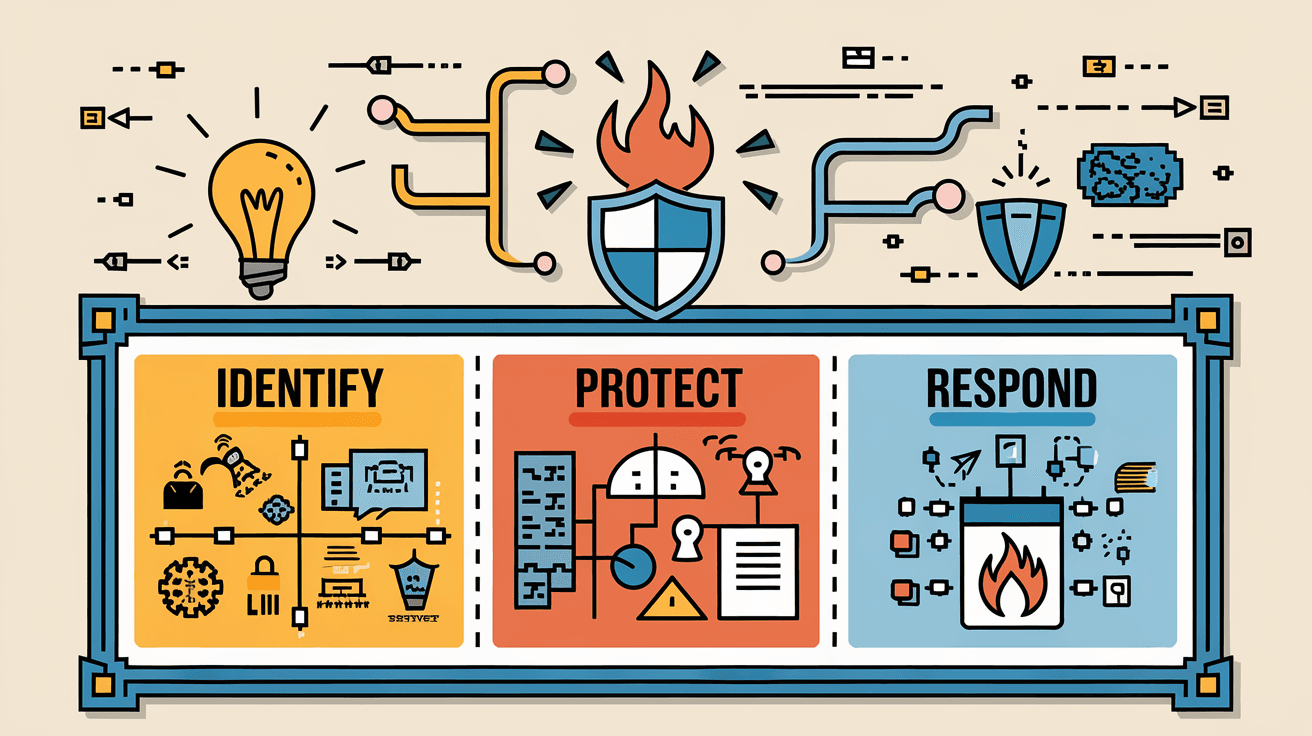
The framework is organized around five core functions. These functions provide a high-level view of cybersecurity activities and help organizations build a strong security program.
1. Identify
This function helps you understand your organization’s cybersecurity risks. It involves knowing what assets you have, what threats you face, and what vulnerabilities exist.
- Inventory of hardware and software
- Understanding data flows and critical systems
- Risk assessments and business impact analysis
2. Protect
Protect focuses on putting safeguards in place to limit or contain the impact of a cybersecurity event.
- Access controls and identity management
- Employee training and awareness programs
- Data encryption and secure configurations
3. Detect
Detecting cybersecurity events quickly is crucial. This function involves monitoring systems to spot anomalies or breaches.
- Continuous network monitoring
- Security information and event management (SIEM) tools
- Regular vulnerability scanning
4. Respond
When an incident happens, the respond function guides how to handle it effectively.
- Incident response planning and communication
- Mitigation strategies to limit damage
- Coordination with external partners and law enforcement
5. Recover
Recovery focuses on restoring normal operations after a cybersecurity incident.
- Backup and data restoration processes
- Lessons learned and improvement plans
- Communication with stakeholders during recovery
How Organizations Use the NIST Cybersecurity Framework
Many organizations use the NIST Cybersecurity Framework as a foundation for their cybersecurity programs. Here’s how it typically works in practice:
Step 1: Prioritize and Scope
Organizations start by defining their business objectives and the scope of their cybersecurity efforts. This means deciding which systems and data are most critical.
Step 2: Create a Current Profile
Next, they assess their current cybersecurity posture by mapping existing controls and processes to the framework’s core functions.
Step 3: Develop a Target Profile
Organizations then set goals for where they want to be in terms of cybersecurity maturity. This target profile reflects their risk tolerance and business needs.
Step 4: Identify Gaps and Plan
By comparing the current and target profiles, organizations identify gaps and develop action plans to improve security.
Step 5: Implement Improvements
Finally, organizations implement the planned changes, monitor progress, and update their profiles regularly.
Benefits of Using the NIST Cybersecurity Framework
Using the NIST Cybersecurity Framework offers many advantages:
- Improved risk management: Helps focus resources on the most critical risks.
- Better communication: Provides a common language for cybersecurity discussions.
- Regulatory alignment: Supports compliance with laws like HIPAA, FISMA, and others.
- Flexibility: Works for organizations of any size or industry.
- Continuous improvement: Encourages ongoing assessment and enhancement of security.
Real-World Examples of NIST Cybersecurity Framework in Action
Many organizations have successfully used the NIST Cybersecurity Framework to strengthen their defenses.
- Healthcare providers: Use the framework to protect patient data and comply with HIPAA.
- Financial institutions: Apply it to manage risks related to fraud and cyberattacks.
- Manufacturing companies: Use it to secure operational technology and prevent disruptions.
- Government agencies: Adopt the framework to meet federal cybersecurity standards.
These examples show how the framework adapts to different environments and helps organizations protect what matters most.
Common Challenges When Implementing the Framework
While the NIST Cybersecurity Framework is flexible, some organizations face challenges:
- Resource limitations: Smaller organizations may struggle with budget or staff.
- Complexity: Understanding and mapping controls can be time-consuming.
- Change management: Getting buy-in from all levels of the organization can be difficult.
- Keeping up with threats: Cyber threats evolve quickly, requiring ongoing updates.
To overcome these challenges, organizations often start small, focus on high-priority areas, and seek expert guidance when needed.
Tips for Getting Started with the NIST Cybersecurity Framework
If you want to use the NIST Cybersecurity Framework, here are some practical tips:
- Start with a risk assessment: Understand your biggest cybersecurity risks first.
- Engage stakeholders: Involve leadership, IT, and business teams early.
- Use available resources: NIST offers guides, tools, and templates to help.
- Set realistic goals: Focus on achievable improvements over time.
- Monitor and update: Cybersecurity is ongoing, so review your program regularly.
Conclusion
The NIST Cybersecurity Framework is a powerful tool that helps you manage cybersecurity risks in a clear and organized way. By focusing on identifying, protecting, detecting, responding, and recovering, you can build a strong defense against cyber threats.
Whether you’re a small business or a large organization, the framework’s flexibility makes it a valuable guide for improving your cybersecurity. Using it can help you protect your data, meet regulatory requirements, and communicate better about security. If you want to strengthen your cybersecurity, the NIST Cybersecurity Framework is a great place to start.
FAQs
What industries use the NIST Cybersecurity Framework?
The framework is used across many industries, including healthcare, finance, manufacturing, and government. Its flexibility makes it suitable for any organization looking to improve cybersecurity.
Is the NIST Cybersecurity Framework mandatory?
No, it is voluntary. However, many organizations adopt it to meet regulatory requirements or improve their security posture.
How often should organizations update their cybersecurity profiles?
Organizations should review and update their profiles regularly, at least annually, or whenever significant changes occur in their environment or threat landscape.
Can small businesses benefit from the NIST Cybersecurity Framework?
Yes, the framework is designed to be scalable and adaptable, making it useful for small businesses with limited resources.
What is the difference between the NIST Cybersecurity Framework and other standards?
The NIST Framework is a flexible guideline focused on risk management, while other standards like ISO 27001 provide specific requirements for information security management systems.




