
What is Managed Detection and Response (MDR)
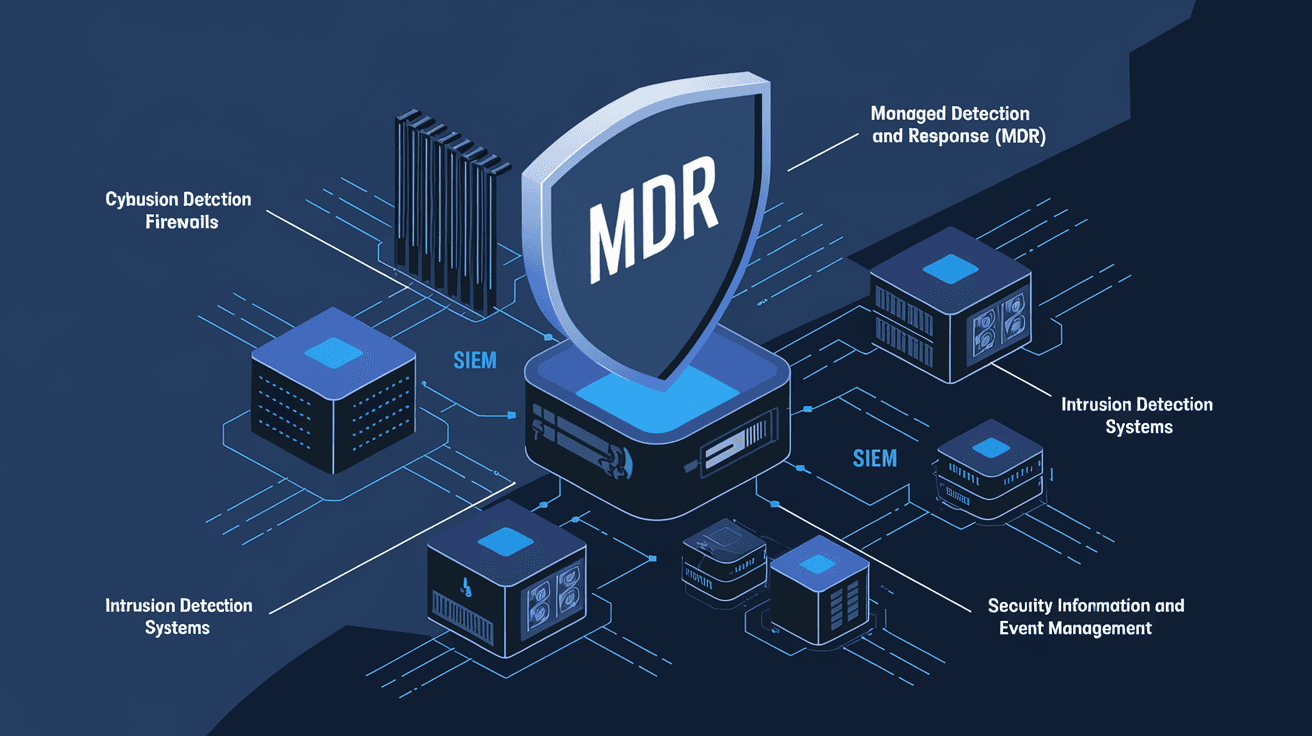
Introduction
You might have heard the term Managed Detection and Response, or MDR, popping up in cybersecurity conversations. If you’re wondering what MDR really means and why it matters, you’re in the right place. MDR is a service designed to help businesses detect and respond to cyber threats quickly and effectively.
In today’s digital world, cyberattacks are more frequent and sophisticated. You need more than just basic antivirus software to protect your data. MDR combines technology and expert human analysis to keep your systems safe. Let’s explore what MDR is, how it works, and why it’s becoming a must-have for organizations of all sizes.
What is Managed Detection and Response (MDR)?
Managed Detection and Response (MDR) is a cybersecurity service that helps organizations identify and respond to threats in real time. Unlike traditional security tools that only alert you to potential issues, MDR providers actively monitor your environment, investigate alerts, and take action to stop attacks.
MDR services combine advanced technology with skilled security analysts who watch over your network 24/7. They use tools like endpoint detection, threat intelligence, and behavioral analytics to spot suspicious activity. When a threat is detected, the MDR team investigates and responds quickly to minimize damage.
Key Features of MDR
- Continuous Monitoring: MDR teams watch your network around the clock.
- Threat Detection: Uses AI and machine learning to find unusual behavior.
- Incident Response: Experts investigate and act on threats immediately.
- Threat Intelligence: Access to global data on emerging cyber threats.
- Reporting: Regular updates and detailed reports on security status.
How Does MDR Work?
MDR works by combining technology and human expertise to protect your digital assets. Here’s a simple breakdown of the process:
- Data Collection: MDR tools gather data from endpoints, servers, cloud environments, and network devices.
- Threat Detection: Using AI and machine learning, the system analyzes data to find anomalies or known attack patterns.
- Alert Triage: Security analysts review alerts to filter out false positives and prioritize real threats.
- Investigation: Analysts dig deeper into suspicious activity to understand the scope and impact.
- Response: The MDR team takes action, such as isolating infected devices or blocking malicious traffic.
- Reporting and Improvement: After handling incidents, the team provides reports and suggests improvements to your security posture.
Technologies Used in MDR
- Endpoint Detection and Response (EDR)
- Security Information and Event Management (SIEM)
- User and Entity Behavior Analytics (UEBA)
- Threat Intelligence Platforms
- Automated Response Tools
Why is MDR Important for Businesses?
Cyber threats are evolving fast, and many businesses struggle to keep up. Hiring and training a full in-house security team can be expensive and time-consuming. MDR offers a cost-effective way to get expert protection without building a large security department.
Benefits of MDR
- Faster Threat Detection: MDR reduces the time it takes to find and respond to attacks.
- Expertise on Demand: Access to skilled security professionals without hiring full-time staff.
- Improved Security Posture: Continuous monitoring helps identify weaknesses before attackers do.
- Cost Efficiency: Avoids the high costs of breaches and reduces the need for expensive security tools.
- Compliance Support: Helps meet regulatory requirements by providing detailed logs and reports.
Who Should Use MDR Services?
MDR is valuable for organizations of all sizes, but especially for:
- Small and Medium Businesses (SMBs): Often lack the resources for a full security team.
- Enterprises: Need to supplement their existing security operations with expert support.
- Highly Regulated Industries: Such as finance, healthcare, and government, where data protection is critical.
- Companies with Remote Workforces: MDR can monitor distributed environments effectively.
How to Choose the Right MDR Provider
Choosing an MDR provider is an important decision. Here are some factors to consider:
- Experience and Reputation: Look for providers with a proven track record.
- Technology Stack: Ensure they use advanced tools like AI-driven detection and automation.
- Response Capabilities: Check how quickly they respond and what actions they take.
- Customization: The service should fit your specific industry and business needs.
- Integration: MDR should work well with your existing security tools.
- Transparency: Providers should offer clear reporting and communication.
Questions to Ask Potential MDR Providers
- How do you detect and prioritize threats?
- What is your average response time?
- Can you provide examples of incidents you’ve handled?
- How do you handle false positives?
- What compliance standards do you support?
Common Challenges MDR Helps Solve
Many organizations face these cybersecurity challenges:
- Alert Overload: Too many false alarms can overwhelm security teams.
- Skill Shortages: Lack of trained cybersecurity professionals.
- Complex Environments: Multiple cloud and on-premises systems to monitor.
- Advanced Threats: Sophisticated attacks that evade traditional defenses.
MDR addresses these by filtering alerts, providing expert analysis, and using advanced detection methods to catch threats early.
MDR vs. Traditional Security Solutions
Traditional security tools like antivirus or firewalls mainly focus on prevention. They alert you when something suspicious happens but don’t always help with response. MDR goes beyond by actively hunting threats and responding to incidents.
| Feature | Traditional Security | MDR Service |
| Monitoring | Limited | 24/7 continuous |
| Threat Detection | Signature-based | AI and behavior-based |
| Response | Manual or none | Automated and expert-led |
| Expertise | In-house or none | Dedicated security team |
| Reporting | Basic alerts | Detailed analysis reports |
Future Trends in MDR
The MDR landscape is evolving quickly. Here are some trends shaping its future:
- Increased Automation: More use of AI to speed up detection and response.
- Integration with Zero Trust: MDR will support zero trust security models.
- Cloud-Native MDR: Services designed specifically for cloud environments.
- Extended Detection and Response (XDR): MDR expanding to cover more data sources.
- Focus on Privacy: Balancing threat detection with data privacy regulations.
Conclusion
Managed Detection and Response (MDR) is a powerful cybersecurity service that helps you stay ahead of cyber threats. By combining advanced technology with expert human analysis, MDR detects attacks early and responds quickly to protect your business. Whether you’re a small company or a large enterprise, MDR can strengthen your security without the high costs of building an in-house team.
As cyberattacks become more complex, relying on traditional security tools alone isn’t enough. MDR offers a proactive approach that keeps your systems safe 24/7. If you want to improve your security posture and reduce risk, exploring MDR services is a smart move.
FAQs
What types of threats can MDR detect?
MDR can detect malware, ransomware, phishing attacks, insider threats, zero-day exploits, and advanced persistent threats (APTs) by analyzing behavior and network activity.
How quickly does MDR respond to incidents?
Most MDR providers aim to respond within minutes to hours, depending on the severity of the threat, ensuring rapid containment and mitigation.
Is MDR suitable for small businesses?
Yes, MDR is ideal for small businesses that lack in-house security teams but want expert protection and continuous monitoring.
Can MDR integrate with existing security tools?
Most MDR services are designed to integrate smoothly with your current security infrastructure, including firewalls, SIEMs, and endpoint protection platforms.
Does MDR help with regulatory compliance?
Yes, MDR provides detailed logs, reports, and incident documentation that support compliance with regulations like GDPR, HIPAA, and PCI DSS.




