
What is Data Segregation
Introduction
When you hear the term "data segregation," you might wonder why it’s important for your information. Whether you’re using cloud services, shared databases, or even managing your own business data, understanding data segregation helps you keep your data safe and organized. It’s about making sure your data stays separate from others’ data, even when stored together.
In this article, I’ll explain what data segregation means, why it matters in today’s digital world, and how it works in different environments. You’ll also learn about its benefits and some common methods used to keep data properly separated. Let’s dive in and see how data segregation can protect your information.
What is Data Segregation?
Data segregation is the process of separating data so that different sets of information do not mix or interfere with each other. This separation is crucial when multiple users or organizations share the same storage or computing resources. The goal is to ensure that one user’s data remains private and secure from others.
Think of it like having separate lockers in a gym. Even though many people use the same locker room, each person’s belongings stay in their own locker. Data segregation works similarly but with digital information.
Why Data Segregation Matters
- Security: Prevents unauthorized access to sensitive data.
- Privacy: Keeps personal or business data confidential.
- Compliance: Helps meet legal requirements like GDPR or HIPAA.
- Performance: Reduces data conflicts and improves system efficiency.
Without proper segregation, data can get mixed up, leading to breaches, data loss, or compliance violations.
How Data Segregation Works
Data segregation can happen at different levels depending on the system or environment. Here are some common ways it is implemented:
Physical Segregation
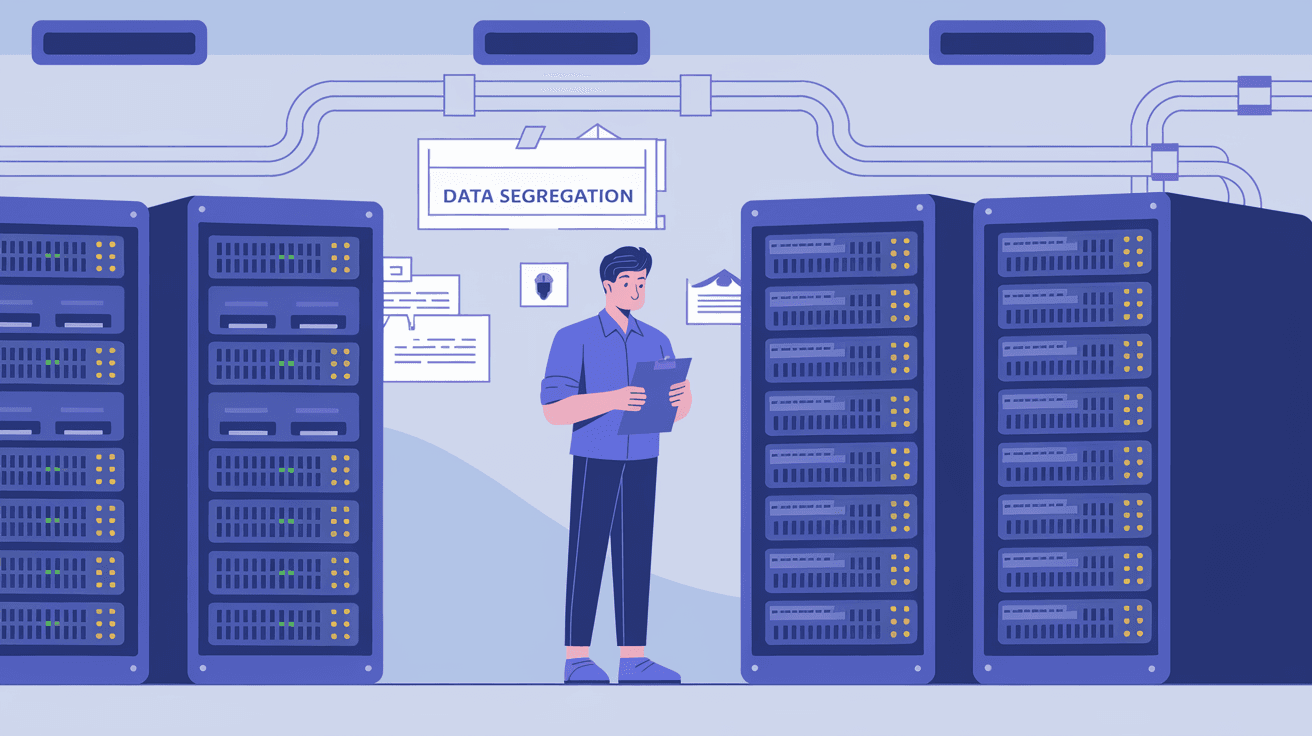
This is the most straightforward method. Data is stored on separate physical devices or servers. For example, one company’s data might be on one server, while another company’s data is on a different server.
- Pros:
- Strong isolation.
- Easy to understand.
- Cons:
- Expensive due to hardware costs.
- Less flexible for scaling.
Logical Segregation
Here, data is separated within the same physical device but logically divided using software. This is common in cloud computing and multi-tenant databases.
- Examples:
- Separate databases or schemas for each user.
- Using access controls and permissions.
- Pros:
- Cost-effective.
- Easier to scale.
- Cons:
- Requires strong security controls.
- Risk of data leakage if misconfigured.
Network Segregation
Data segregation can also happen through network controls. Different data flows are isolated using firewalls, VLANs, or secure tunnels.
- Helps prevent unauthorized network access.
- Often used alongside physical or logical segregation.
Data Segregation in Cloud Computing
Cloud services are popular because they allow many users to share resources. Data segregation is critical here to keep each user’s data private.
Multi-Tenancy and Data Segregation
Cloud providers use multi-tenancy, where multiple customers share the same infrastructure. Data segregation ensures that one tenant’s data is invisible to others.
- Techniques include:
- Virtual machines or containers.
- Encryption of data at rest and in transit.
- Role-based access controls.
Benefits for Cloud Users
- Cost savings by sharing resources.
- Flexibility to scale storage and compute power.
- Assurance that data remains private despite shared infrastructure.
Data Segregation and Compliance
Many laws require organizations to protect data privacy and security. Data segregation helps meet these rules by isolating sensitive information.
Examples of Compliance Requirements
- GDPR: Requires personal data to be protected and access limited.
- HIPAA: Protects health information by controlling who can see it.
- PCI DSS: Requires credit card data to be separated and secured.
Proper data segregation helps companies avoid fines and reputational damage.
Challenges of Data Segregation
While data segregation is essential, it comes with challenges:
- Complexity: Managing segregation in large systems can be complicated.
- Cost: Physical segregation can be expensive.
- Misconfiguration Risks: Incorrect settings can lead to data leaks.
- Performance Impact: Segregation methods might slow down data access.
Organizations must balance security needs with usability and cost.
Best Practices for Implementing Data Segregation
If you want to keep your data safe, here are some tips:
- Use encryption to protect data both at rest and in transit.
- Apply strict access controls and regularly review permissions.
- Choose the right segregation method based on your needs and budget.
- Monitor systems for unusual access or data breaches.
- Train staff on data security and segregation importance.
Real-World Examples of Data Segregation
- Banks: Separate customer accounts and transaction data to prevent fraud.
- Healthcare: Patient records are segregated to comply with privacy laws.
- Cloud Providers: Amazon Web Services and Microsoft Azure use logical segregation to serve millions of users securely.
Conclusion
Data segregation is a key part of keeping your information safe and private, especially in shared environments like cloud computing. By separating data physically, logically, or through network controls, organizations can protect sensitive information and meet legal requirements. While it can be complex and costly, the benefits of data segregation far outweigh the risks of data breaches or compliance failures.
Understanding how data segregation works helps you make better decisions about your data security. Whether you’re a business owner, IT professional, or just curious, knowing about data segregation empowers you to protect your digital information effectively.
FAQs
What is the difference between data segregation and data isolation?
Data segregation separates data logically or physically to prevent mixing, while data isolation focuses on preventing interaction between data sets. Segregation is about separation; isolation is about blocking access.
How does data segregation improve security?
By keeping data separate, segregation limits who can access specific information. This reduces the risk of unauthorized access, data leaks, and breaches.
Can data segregation be done in cloud environments?
Yes, cloud providers use logical segregation methods like virtual machines, containers, and encryption to keep each user’s data separate and secure.
Is data segregation required by law?
Many regulations, such as GDPR and HIPAA, require organizations to protect sensitive data, which often involves data segregation to ensure privacy and security.
What are common challenges in data segregation?
Challenges include managing complexity, costs of physical segregation, risks of misconfiguration, and potential performance impacts on systems.




