
What is Critical Asset Management
Introduction
When you hear the term "Critical Asset Management," you might wonder what it really means and why it’s important. In simple terms, it’s about managing the most valuable and essential assets that keep a business or organization running smoothly. These assets can be anything from machinery and equipment to data and infrastructure.
You might be asking yourself, “How do I know which assets are critical?” or “How can managing these assets better help my organization?” This article will guide you through the basics of Critical Asset Management, its benefits, and how you can apply it to protect what matters most.
What is Critical Asset Management?
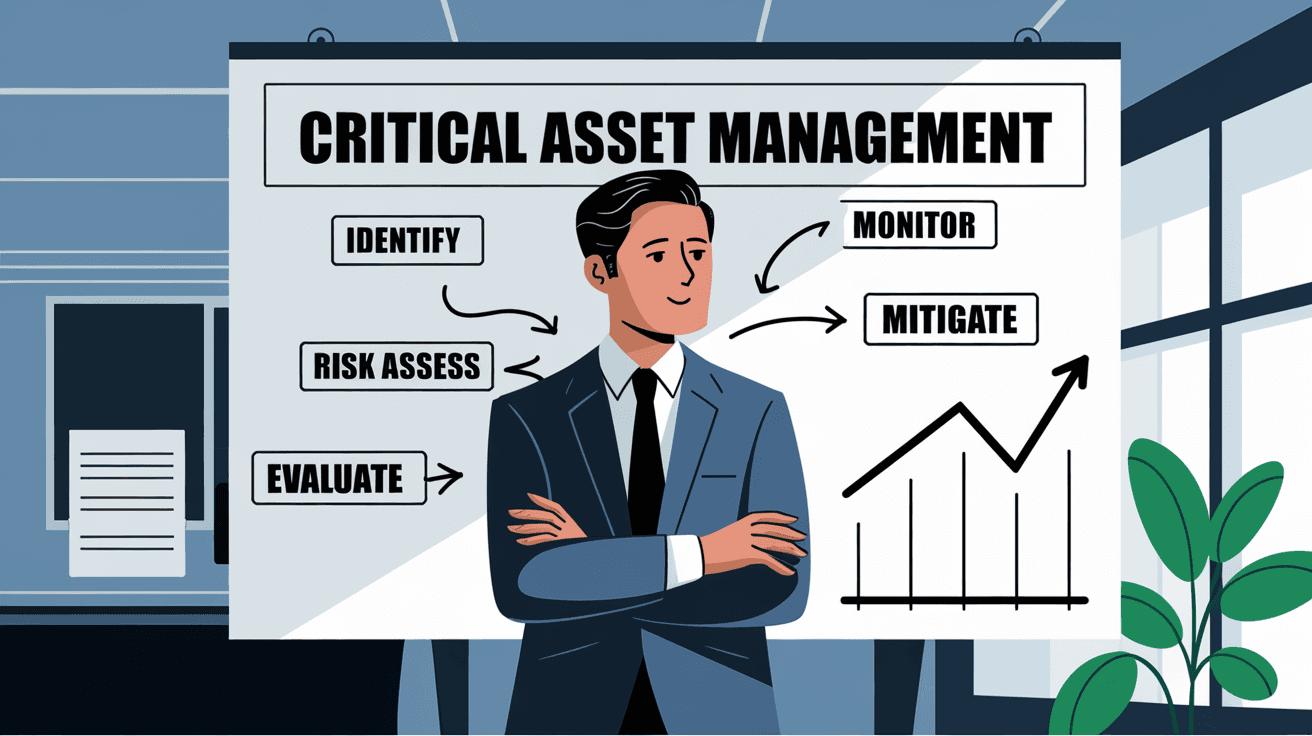
Critical Asset Management (CAM) is a strategic approach to identifying, monitoring, and maintaining assets that are vital to an organization’s operations. These assets are crucial because their failure could cause significant disruptions, financial loss, or safety risks.
CAM focuses on:
- Identifying critical assets based on their importance and impact.
- Assessing risks related to asset failure.
- Prioritizing maintenance and protection efforts.
- Optimizing asset performance to extend lifespan and reduce downtime.
By managing critical assets effectively, organizations can avoid costly breakdowns, improve safety, and ensure continuous operation.
Why is Critical Asset Management Important?
Managing critical assets is essential because these assets often support key functions that keep a business alive. If a critical asset fails, it can lead to:
- Production stoppages
- Safety hazards
- Financial losses
- Damage to reputation
For example, in industries like energy, transportation, or healthcare, a single asset failure can have severe consequences. CAM helps organizations prepare for and prevent these failures.
Benefits of Critical Asset Management
- Reduced downtime: Regular monitoring and maintenance prevent unexpected breakdowns.
- Cost savings: Prioritizing critical assets helps allocate resources efficiently.
- Improved safety: Identifying risks reduces accidents and hazards.
- Better decision-making: Data-driven insights guide investments and repairs.
- Regulatory compliance: Helps meet industry standards and legal requirements.
How to Identify Critical Assets
Not all assets are equally important. To manage them effectively, you first need to identify which ones are critical. This involves:
- Understanding business processes: Know which assets support key operations.
- Assessing impact: Evaluate what happens if an asset fails.
- Considering safety and compliance: Some assets are critical because of legal or safety reasons.
- Consulting stakeholders: Get input from different departments.
Tools and Techniques for Identification
- Risk assessment matrices: Rank assets based on likelihood and impact of failure.
- Failure mode and effects analysis (FMEA): Analyze potential failure points.
- Criticality ranking: Assign scores to assets based on importance.
- Asset registers: Maintain detailed records of all assets.
Components of Critical Asset Management
Effective CAM involves several key components working together:
Asset Inventory and Documentation
Keeping an updated list of all assets, including details like age, condition, and location, is the foundation. This helps track assets and plan maintenance.
Risk Assessment and Prioritization
Evaluating the risks associated with each asset helps prioritize which ones need immediate attention or extra protection.
Maintenance Planning and Scheduling
Developing maintenance plans based on asset criticality ensures resources focus on the most important assets first.
Monitoring and Condition Assessment
Using sensors, inspections, and data analytics to monitor asset health helps detect problems early.
Performance Optimization
Analyzing asset performance data to improve efficiency and extend asset life.
Emergency Preparedness and Response
Having plans in place for asset failure minimizes downtime and damage.
Technologies Used in Critical Asset Management
Modern CAM relies heavily on technology to improve accuracy and efficiency.
- Internet of Things (IoT): Sensors collect real-time data on asset condition.
- Predictive Analytics: Uses data to predict when an asset might fail.
- Enterprise Asset Management (EAM) Software: Centralizes asset data and maintenance schedules.
- Geographic Information Systems (GIS): Maps asset locations for better management.
- Drones and Robotics: Inspect hard-to-reach assets safely.
These technologies help organizations move from reactive to proactive asset management.
Implementing Critical Asset Management in Your Organization
Starting CAM can seem overwhelming, but breaking it down into steps makes it manageable.
Step 1: Define Objectives and Scope
Decide what you want to achieve with CAM and which assets to include.
Step 2: Identify and Classify Assets
Use the techniques mentioned earlier to find your critical assets.
Step 3: Assess Risks and Prioritize
Evaluate the risks and decide where to focus your efforts.
Step 4: Develop Maintenance and Monitoring Plans
Create schedules and choose monitoring tools.
Step 5: Train Staff and Assign Responsibilities
Ensure everyone understands their role in managing critical assets.
Step 6: Use Technology to Support CAM
Implement software and sensors to gather and analyze data.
Step 7: Review and Improve
Regularly assess the effectiveness of your CAM program and make adjustments.
Challenges in Critical Asset Management
While CAM offers many benefits, organizations often face challenges such as:
- Data quality issues: Incomplete or inaccurate asset data can hinder decision-making.
- Resource constraints: Limited budgets and staff can restrict maintenance activities.
- Complex asset environments: Large organizations may have thousands of assets to manage.
- Resistance to change: Employees may be hesitant to adopt new processes or technologies.
Overcoming these challenges requires strong leadership, clear communication, and ongoing training.
Examples of Critical Asset Management in Different Industries
Energy Sector
Power plants use CAM to monitor turbines, transformers, and pipelines. Predictive maintenance helps avoid blackouts and costly repairs.
Transportation
Railways and airlines manage critical assets like tracks, engines, and control systems to ensure safety and reliability.
Healthcare
Hospitals manage critical medical equipment and IT systems to provide uninterrupted patient care.
Manufacturing
Factories focus on machinery and production lines to maintain output and quality.
Conclusion
Critical Asset Management is a vital strategy for any organization that depends on key assets to operate. By identifying, assessing, and prioritizing these assets, you can reduce risks, save costs, and improve safety. Using modern technologies and clear processes makes managing critical assets easier and more effective.
If you want your organization to run smoothly and avoid costly disruptions, understanding and implementing CAM is a smart move. It’s about protecting what matters most and ensuring your business stays strong for the long term.
FAQs
What qualifies an asset as critical?
An asset is critical if its failure would cause significant operational disruption, safety risks, financial loss, or legal issues. The impact on business processes determines criticality.
How does technology improve Critical Asset Management?
Technology like IoT sensors and predictive analytics provides real-time data, enabling proactive maintenance and reducing unexpected failures.
Can small businesses benefit from Critical Asset Management?
Yes, even small businesses have critical assets. CAM helps prioritize maintenance and protect key resources, improving efficiency and reducing costs.
What is the difference between asset management and critical asset management?
Asset management covers all assets, while critical asset management focuses specifically on assets essential to business continuity and safety.
How often should critical assets be reviewed?
Critical assets should be reviewed regularly, often quarterly or biannually, depending on risk levels and operational demands. Regular reviews ensure up-to-date information and effective management.




